2026-10-10 · Dave Miller
How Ice Dams Damage Roofs in Appleton
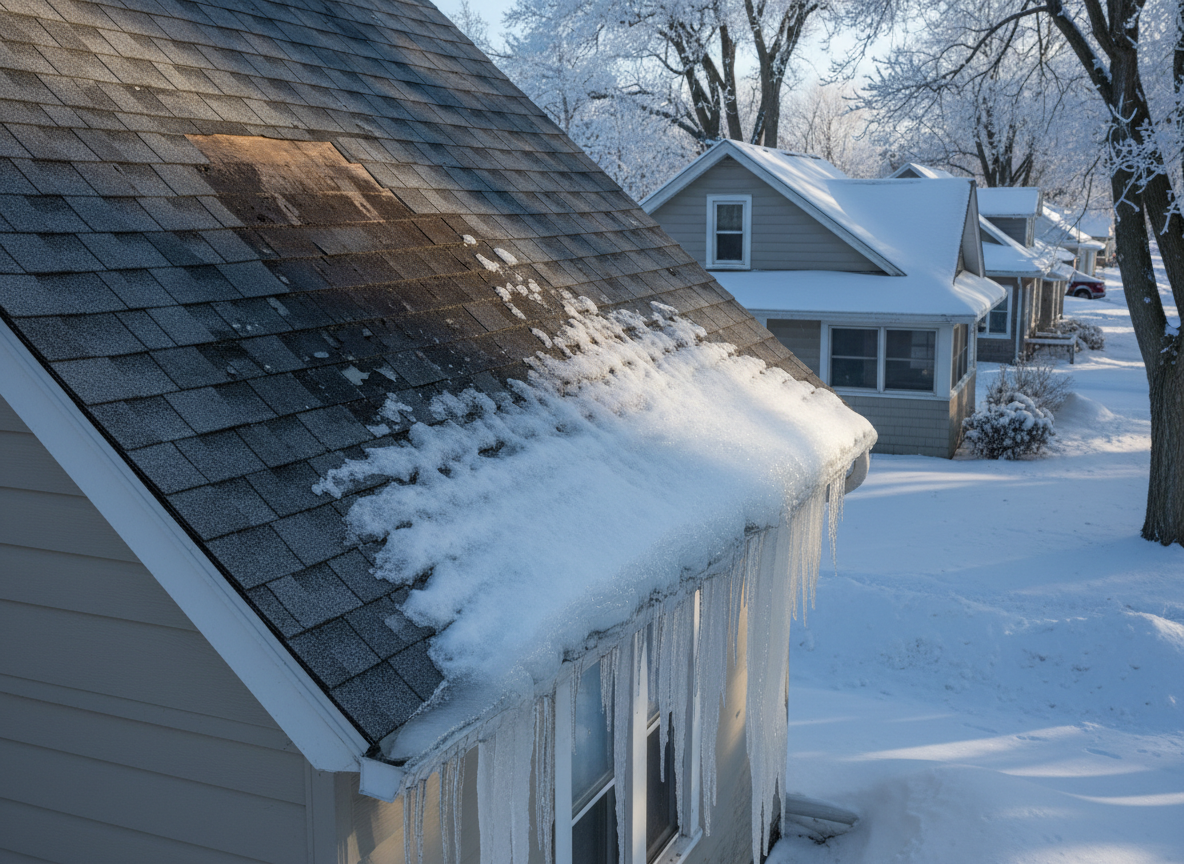
Ice dams damage roofs in Appleton by melting snow that refreezes at the eaves, forcing water under shingles and into the roof deck during the repeated freeze-thaw cycles of our cold winters. This process starts when heat escaping from the attic melts snow on the upper roof while the overhang stays below freezing, creating a dam that backs up water.
Appleton's Climate and Ice Dam Formation
Appleton's humid continental climate brings long stretches of sub-freezing temperatures from December through February that allow snow to accumulate on roofs across Outagamie County. Warm spells in January and February then trigger meltwater that refreezes overnight along the eaves. Homes near the Fox River in Downtown Appleton and older stock around Lawrence University often see faster heat loss through outdated insulation, accelerating the cycle. Nearby cities like Green Bay and Oshkosh share the same pattern, but Appleton's slightly higher elevation can produce marginally thicker snow loads on North Side roofs. These conditions turn even moderate snowfall into repeated ice dam events rather than isolated problems.
How Meltwater Penetrates Roofing Layers
Once an ice dam forms, water finds every gap in the shingle layer and works its way under the felt or synthetic underlayment. In many Appleton homes built before 1980, the original felt has aged and cracked, giving water a direct path to the plywood deck. The backed-up water can travel several feet upslope before finding a nail hole or seam, which is why leaks frequently appear inside the living space rather than directly at the eaves. Over multiple cycles the constant wetting and freezing loosens fasteners and lifts shingles, widening the entry points for the next thaw.
Damage Patterns Seen in Local Neighborhoods
Houses in the Historic Central Neighborhood and Erb Park area commonly show rot along the roof deck within two to three weeks of repeated ice dam activity because the older rafters sit closer together and trap moisture. On the North Side, where many homes have steeper pitches, the dams tend to form lower and affect gutters first, leading to overflow that soaks fascia boards. In both cases the damage spreads faster when the roof already carries debris from nearby trees or when flashing around chimneys has settled. These patterns differ from storm damage because the water entry stays hidden until interior stains appear.
Early Indicators Before Major Leaks Appear
Homeowners in West Appleton and Colony Oaks often notice long icicles hanging from gutters or dark streaks on the soffit as the first visible signs. Inside, brown stains on ceiling drywall near the exterior walls or musty attic smells after a January thaw point to active water intrusion. Checking the attic during daylight hours reveals daylight pinpoints where water has worked through the deck. These clues appear well before widespread shingle loss, giving owners time to address the dam before it reaches the Emergency Roof Leak Repair stage.
Practical Steps That Reduce Future Ice Dam Risk
Improving attic ventilation and adding insulation reduces the temperature differential that drives ice dam formation on roofs throughout Appleton. Clearing gutters of leaves before the first snow prevents meltwater from pooling at the eaves in the first place. For homes already experiencing repeated issues, professional removal of the ice combined with targeted sealing at valleys and penetrations limits water entry. Residents in Downtown Appleton can review the full process in our guide on Ice Dams: Why They Cause Leaks & How to Stop Them and schedule an inspection through our Ice Dam Removal & Prevention service before the next cold snap arrives.